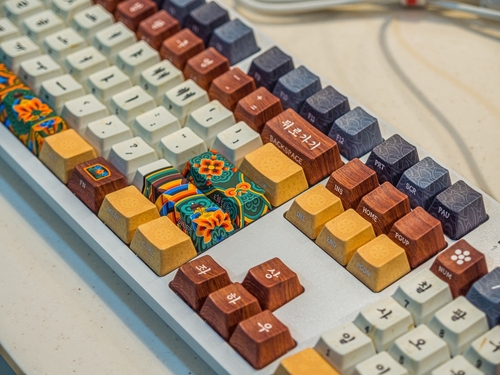

From K-pop and K-dramas to gaming, did you know that the world’s growing love for Korean culture has inspired more people to start typing in Korean? And many seek out an authentic experience that helps them connect with the language. With a Korean keyboard, you can connect more deeply with the language behind your favorite shows and music.
Unlike the standard QWERTY keyboards, Korean keyboards have unique layouts that can feel confusing for beginners. Many learners struggle with typing Korean characters, navigating layouts, or finding the right keyboard.
That’s why we’ve created this guide at Remitly to help you understand Korean keyboards effortlessly. In it, we cover the different types, key features, setup tips, and our top recommendations for every need.
What makes Korean keyboards different?
Korean keyboards are specifically designed to support Hangul, the Korean writing system. Unlike the English alphabet, Hangul is a phonetic system built from individual consonants and vowels that form syllable blocks.
Each block represents a single syllable. When you type, an Input Method Editor (IME)—a software tool that converts keystrokes into Korean characters—automatically combines these characters into the correct syllables for accurate writing.
There are two main Korean keyboard layouts:
- 2-set: The most common and beginner-friendly, with a simple arrangement of consonants and vowels that makes everyday typing easy.
- 3-set: Though less common, the 3-set layout includes extra characters and shortcuts that some advanced users or professionals prefer.
What are the types of Korean keyboards?
To type in Korean comfortably, it helps to understand the types of keyboards available:
Physical Korean keyboards
Many enthusiasts prefer mechanical keyboards for their improved typing accuracy and solid construction. Many brands also offer pre-built Korean keyboards, so you don’t need to replace keycaps manually. This makes them a convenient choice for frequent typists.
Virtual Korean keyboards
If you don’t need a separate physical keyboard, virtual Korean keyboards are a great software-based alternative. Most devices include built-in Korean input options on Windows, Mac, and mobile platforms. Third-party Korean apps also offer advanced features for learners and professionals.
Hybrid solutions
If you want the best of both worlds, hybrid solutions let you combine both layouts effectively. They make it easier to switch between Korean and English keyboards without a separate device.
One option is to use English keyboards with Korean stickers or overlays, which allow you to see both character sets while maintaining your familiar layout.
Another approach is programmable keyboards that can be customized to support Korean input methods, allowing you to assign Hangul characters to specific keys. These keyboards are great for bilingual users who want flexibility without investing in a separate keyboard.
Essential features to look for
When choosing a Hangul keyboard, be sure to check out the following features:
Build quality
A durable keyboard is key for frequent Korean typing, especially since forming Hangul syllables often involves pressing several keys in sequence. Look for models built with sturdy plastics, metal frames, or reinforced keycaps that resist wear and fading.
Compatibility
Not every Korean keyboard works across all devices. Before buying, make sure it’s compatible with Windows, macOS, Android, and iOS. Some keyboards require special drivers or software to enable full Hangul input. Checking compatibility early on helps avoid setup issues later.
Switch types
The type of switch plays a big role in how your keyboard feels and sounds. Mechanical switches give satisfying tactile feedback, while membrane switches are softer, quieter, and usually more affordable. Some mechanical keyboards even let you swap out switches to personalize the typing feel key by key.
Backlighting
Backlighting isn’t just stylish—it’s practical, too. Illuminated keys help you see Hangul characters clearly in low-light settings or when studying at night. Many keyboards offer customizable RGB lighting, so you can highlight Korean characters or favorite keys for better visibility and comfort.
Software support
Many Korean keyboards come with companion software that lets you customize your setup—and this software support can enhance your experience in powerful ways. You can remap keys, create shortcuts or macros, and switch between different layouts based on your needs.
Several advanced programs even let you save multiple profiles. For example, you may optimize one for typing and another for gaming. Be sure to confirm that the software works with your operating system to avoid missing out on key features.
Setting up your Korean keyboard
How to set up a Korean keyboard on Windows
Add Korean as a language on Windows by following these steps:
- Open Settings, click Time and Language, and then Language and Region
- Click “add a language” under the preferred languages section
- Search for Korean and select it, then click Next, and Install
Windows will download and add the Korean language pack, which includes the keyboard layout.
To enable the Korean keyboard input:
- Once installed, you’ll see a language icon on your taskbar, usually near the clock
- Click the icon and select Korean to switch your keyboard input
- You’re now ready to type in Hangul
If you want to configure keyboard shortcuts, Windows allows you to switch between languages using:
- Press and hold Windows + Spacebar to cycle through installed languages
- Left Alt + Shift to switch between input languages
Customize these settings by following these steps:
- Select Start > Settings > Time & Language > Typing
- Select advanced keyboard settings
- Click language bar options
- Go to the Advanced Key Settings tab
- Click change the key sequence, select keyboard combinations to switch between languages, and click OK.
After installation, you might encounter a few common issues. Here’s how to fix them:
- Korean characters not showing clearly: Ensure you’ve installed the Korean language pack and select the correct keyboard input mode (Hangul).
- Shortcut keys not working: Check your shortcut settings under “Advanced keyboard settings.” Sometimes, custom shortcuts conflict with default ones.
- Typing produces strange characters: Make sure your application supports Korean input. Some programs may need a restart after installation.
- Accidentally switch back to English: Keep an eye on the taskbar language icon and switch back to Korean when needed.
How to set up a Korean keyboard on a Mac
Typing in Korean on a Mac is simple once you’ve added the right input sources.
To add Korean input sources, follow the steps below:
- Choose Apple menu > System Settings (or System Preferences, depending on your version of macOS).
- Go to Keyboard > Text input > Edit
- Click the + button in the dialog box that appears and search for Korean
- Select your preferred layout, usually 2-set Korean, and click add
- Enable “Show input menu in the menu bar” so you can easily switch between languages from the menu bar.
After adding the input source, switch languages using the following shortcuts:
- Control + Spacebar to switch between the last two used input sources
- Customize shortcuts in system settings, keyboards, shortcuts, and then input sources
To optimize the Korean typing experience on macOS:
- Turn on the Keyboard Viewer under System Settings, click Keyboard, then text input, click Edit, and turn on “Show input menu in the menu bar.”
- To enable predictive text for Korean, go to System Settings, Keyboard, Text Input, Edit, then toggle “Show Inline Predictive Text.”
Note: Menu names and shortcuts may vary by OS version. If you don’t see an option, search settings for “keyboard” or “input sources.”
How to set up a Korean keyboard on mobile
Installing Korean keyboards on iOS and Android is quick and easy. To install on iOS:
- Open Settings
- Go to General, Keyboard, then Keyboards
- Select Add new keyboard
- Scroll down and choose Korean
- Once added, the Korean keyboard will appear in your list of available input languages.
Install a Korean keyboard on Android devices with the following steps:
- Open Settings
- Click on System
- Select Language and Input
- Choose on-screen keyboard and manage keyboards
- Select your default keyboard app (such as Gboard)
- Add Korean as an input language
- Turn on your preferred Korean keyboard layout and tap Done to finish the setup.
Here are some recommended Korean keyboard apps and their key features:
- Gboard (iOS and Android): Offers predictive Korean typing, emoji suggestions, and swipe typing for faster input.
- Swiftkey (iOS and Android): Adapts to your typing style, predicts Korean words accurately, and allows seamless switching between multiple languages.
- Korean keyboard – Hangul (Android): Simple and beginner-friendly, designed specifically for smooth Hangul typing on mobile devices.
Using these apps can improve your typing speed, reduce errors, and provide smart features like auto-correct and predictive text tailored for Korean.
Top Korean keyboard recommendations
Now that you’ve learned how to configure your Korean keyboard, here’s how to find the one that fits you best:
Budget-friendly options
If you’re just starting out or want to stay on budget, there are plenty of Korean keyboards under $50 that work well for everyday use. Brands like Logitech, Rapoo, and Keychron offer some of the best Korean keyboards for beginners. You can also find entry-level mechanical keyboards with solid switches or comfortable designs. They’re ideal for students or casual users who want a good typing feel without breaking the bank.
Premium choices
If you type in Korean often or want something more advanced, consider investing in premium keyboards. These keyboards are built for comfort and performance—with durable frames, customizable lighting, and hot, swappable switches that let you fine-tune how each key feels.
For gamers, brands like Corsair, Razer, and ABKO offer Korean keyboard layouts with anti-ghosting, programmable macros, and per-key RGB lighting. These features are great for both fast typing and immersive gaming experiences.
Software solutions
If you already have a keyboard, you can still type in Korean using software-based options. Windows, macOS, Android, and iOS all include free Korean typing tools that let you switch between languages in seconds.
If you want more advanced features, premium Korean typing apps offer smart suggestions, autocorrect, and customizable layouts. These tools help improve speed and accuracy, making them useful for both beginners and experienced users.
Start typing Korean with confidence
A proper Korean keyboard makes typing in Hangul simple and natural. It helps you form syllables correctly, avoid mistakes, and type faster, whether you’re learning, working, or chatting in Korean. For professionals, it ensures a typing experience that matches native standards.
With the right setup, you’ll type more comfortably and accurately. Explore different keyboard types, layouts, and features to find what best fits your needs and budget. Once you’re set up, typing in Korean feels effortless and enjoyable.
FAQs
Do I need a physical keyboard to type in Korean?
No. Most computers and mobile devices let you add a Korean input method through system settings. However, a physical keyboard with Hangul characters can make typing easier and more comfortable—especially for frequent use.
What’s the difference between 2-set and 3-set Korean keyboard layouts?
The 2-set layout is the standard and most widely used—with consonants on the left and vowels on the right. The 3-set layout adds extra keys for faster typing and fewer keystrokes, which advanced typists often prefer. Most beginners start with the 2-set layout because it is simpler and more supported on all devices.
Can I use Korean keyboard stickers on my existing keyboard?
Yes. You can apply Korean keyboard stickers or overlays to your current keyboard. They display Hangul characters alongside English letters, making it easier to learn key placement without buying a new device.
How do I switch between Korean and English typing quickly?
- Windows: Press Alt + Shift or Windows + Spacebar to switch input languages
- Mac: Press Control + Spacebar or Control + Option + Spacebar
You can also customize these shortcuts in your keyboard settings for even faster access.
Are Korean keyboards compatible with gaming?
Absolutely. Most Korean keyboards work perfectly for gaming. High-end models often include anti-ghosting, customizable macros, and RGB lighting, just like English gaming keyboards. You can play games in both Korean and English without any performance issues.
What’s the best Korean keyboard for beginners?
For beginners, a budget-friendly 2-set Korean keyboard or a standard keyboard with Korean keycaps is ideal. These options are simple to use, widely compatible, and affordable. You can also start with virtual Korean keyboards on Windows, Mac, or mobile devices. They’re convenient and perfect for learning without investing in a physical keyboard.