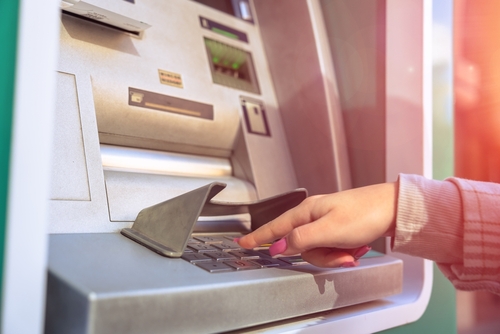

ATM (or automated teller machine) deposits are becoming increasingly common in the US, providing a convenient way to put money into your bank account outside regular bank hours. But many people still have questions about the process—and understandably so. The when and how of the process can differ from bank to bank and by ATM type, so it can be confusing.
At Remitly, we make sending and receiving money internationally a breeze, and we want to make understanding how to deposit cash at an ATM just as easy. That’s why we created this guide to cover which ATMs accept cash deposits, how the process works, the fees you might pay, and important safety considerations.
Which ATMs accept cash deposits?
Most major US banks (and some smaller ones) offer ATMs that accept cash deposits. These include:
- Bank of America
- Wells Fargo
- American Bank
- Chase
- Regions Bank
- Old National Bank
Most credit unions also accept ATM cash deposits from their members. It’s worth noting that third-party ATMs, like those at convenience stores or gas stations, don’t usually offer this functionality.
But even among banks and credit unions, not every ATM is equipped to accept cash deposits. Look for a sign that says “deposit taking,” “cash deposit machine (CDM),” or “smart ATM”. You can also check your bank’s website or mobile app to find the nearest cash deposit-enabled ATM.
How to deposit cash at an ATM: step-by-step guide
Never deposited cash at an ATM before? Here are the steps to follow:
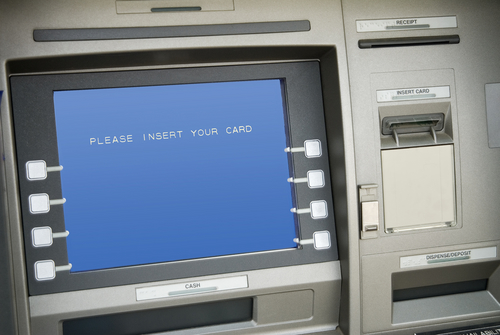
- Begin by inserting your debit card into the ATM and entering your PIN. Some more modern machines don’t even require your debit card; instead, they use digital wallets like Apple Pay and Google Pay.
- You’ll see a menu with various options for different actions you can take. Find the one that says something along the lines of “deposit.”
- At this point, you may need to select the account you wish to deposit cash into.
- The machine will prompt you to insert your notes by placing them in a designated receptacle in the ATM. Make sure the notes are all aligned, unbent, and facing the same direction.
- The ATM then counts the notes and verifies how much money you’ve deposited by using advanced scanners. These examine each bill and can detect fake or damaged bills. If any bill is found to be unusable, the ATM will let you know.
- The total amount deposited will be displayed on the screen, which you’ll need to review and accept.
- Finally, you’ll be offered a receipt for your transaction.
Here are a few tips to make sure the process goes as smoothly as possible:
- Ensure the ATM can accept cash deposits. Look for a sign on the machine that indicates this.
- Prepare your cash before you insert your debit card and PIN. Make sure the bills are neatly arranged, facing the same way, and that they’re all crisp and not bent or folded.
- Count your money. Make sure that the amount you’re depositing matches the total the ATM counts.
- Be aware of your surroundings. Look around the ATM to see that no one is standing nearby, so you have privacy and safety while depositing your cash.
ATM cash deposit limits and fees
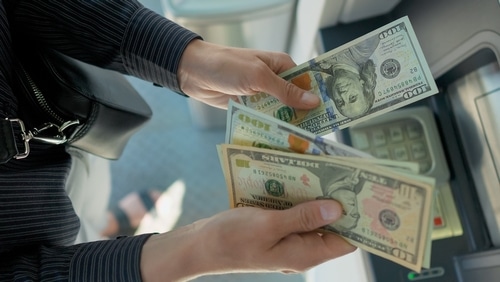
Most banks will impose ATM deposit limits for a single time or during the course of a month. Some might offer free deposits up to a certain amount, or make provision for a specified number of deposits in a month.
It’s best to check your bank’s terms and conditions, because limits on deposits will vary widely between banks and even account types. By doing this, you can also find out how much you’ll pay to deposit cash at an ATM. Some banks make this free if you use their machines, whereas others will charge a percentage of the deposit total or a flat fee each time you make a deposit. Some banks offer free deposits up to a certain amount and charge for larger amounts.
It’s a good idea to take note of potential ATM deposit fees at the time you open your bank account by carefully reading the terms and conditions. If you already have an account, you can often find this information on your bank’s website or mobile app, or you can give them a call.
Safety and security tips for ATM cash deposits
Carrying a large amount of cash and depositing it at an ATM can feel uncomfortable if you aren’t confident about how to keep yourself and your cash safe. The best way to stay secure is to follow a few basic safety tips.
- When carrying cash, keep it in a closed envelope or securely tucked into your wallet, in a secure place. Don’t leave it unattended or in a shallow pocket where it could fall out.
- Before using the ATM, check your surroundings. If you see anyone suspicious nearby or anything strange at the ATM, consider looking for a more secure machine.
- Use well-lit, secure ATM locations. Using the ATM at your bank’s branch can be one of the safest ways to deposit cash, as there is often security around. Avoid ATMs in more remote or badly lit parts of a shopping mall, as you can’t see who’s around in locations like these.
- Avoid depositing cash at night. If you have no choice but to deposit at night, try not to input large amounts—only what you need for the moment. It’s better to wait until daylight, when there are more people around and better lighting to see what’s around.
- Keep your receipts. Just in case, we recommend holding on to those ATM receipts until you can confirm the deposit reflects on your account statement.
What to do if an ATM malfunctions during a deposit
While ATM cash deposits are generally safe and easy, there’s always a small chance something could go wrong. Very occasionally, a malfunction could cause your card to be retained or cash to be counted incorrectly. A power outage could even cause the machine to go down mid-transaction. If you find yourself in any of these situations, here’s what you can do:
- Note the date, time, and ATM location, along with the machine ID if there is one.
- Keep the receipt the machine gives you. If you don’t get a receipt, take a photo with your smartphone of the error on the screen.
- Call the number on the ATM, which is provided in case of mishaps or emergencies.
- If you’re at a branch ATM, go into the bank and explain to the manager what’s just happened. Make sure to get a case reference number so you can easily follow up.
- ATMs generally have surveillance cameras, so visibly count your money if you can before walking away.
- Follow up with the bank regularly to ensure your issue is resolved quickly.
Alternatives to ATM cash deposits
There are other ways to deposit money into your account if you prefer not to use the ATM. These include making the deposit in person with your bank teller, using a shared branch network of your credit union, or buying a money order.
If you’re depositing a large amount of cash, it’s worth considering visiting a bank teller to help you. However, this method isn’t as convenient as an ATM deposit and may take longer, as you’ll likely need to queue.
A money order can be purchased at post offices or certain participating retailers, allowing you to send money to yourself. There is typically a designated counter where you can give your own details so the money order will be paid to you. You can then deposit your money using your bank’s mobile check deposit service, or you can mail it to your bank. However, this method isn’t as convenient or quick as depositing at an ATM, as it requires several steps to get your cash into your account.
Take control of your banking
Cash deposits at ATMs are available 24/7, making them one of the most convenient ways to get paper money into your bank account. But be aware that there may be fees associated with this convenience, so it’s a good idea to contact your bank or visit their website or mobile app to find out what these additional costs might be. At the same time, you can check the locations of ATMs in your area that accept deposits.
Understanding how and where to deposit money into an ATM makes the whole process much smoother. Now that you’ve read our guide, you’ll know just what to do the next time you deposit cash at an ATM and how to stay as safe as possible.
FAQs
Can you deposit cash at an ATM that’s not your bank?
Generally, no. Most ATMs are for that specific bank’s customers. The exception here is that some credit union networks have shared facilities you can deposit cash into.
How long does it take for ATM cash deposits to show in your account?
Most of the time, the ATM cash deposit process is almost instant; the amount will reflect straight away in your account. However, there may be processing delays if the sum you’ve deposited is large, as the bank may need time to verify the legitimacy of the transaction.
What happens if the ATM doesn’t give me a receipt for my cash deposit?
If the ATM doesn’t give you a receipt for your cash deposit, we recommend you contact your bank’s customer service and let them know the receipt wasn’t dispensed. This ensures there’s a telephonic record of your transaction having taken place, just in case there’s an issue with the money reflecting in your account.
Be sure to examine your bank statement and account balance to verify that the money has arrived safely in your account.
Are there limits on the bills I can deposit at an ATM?
Banks tend to set their own limits on how many bills you can deposit at a time and which denominations are accepted, so it’s best to check with your provider what these limitations are.
It’s worth noting that damaged or very old bills may be rejected by the ATM, so ensure your notes are as crisp, new, and flat as possible.
Can I deposit cash at an ATM without a debit card?
Most ATMs still require a debit card for deposits, but some modern ones do allow cardless deposits. For example, some banks enable their clients to use digital wallets like Apple Pay and Google Pay to deposit cash. This usually involves generating a code on your mobile banking app that you use at the ATM.